A new analysis, conducted by Dr. Okoroha's colleagues examined outcomes related to hip arthroscopy. Their research highlights an important takeaway, while new techniques continue to evolve, long-term data remains critical in determining the best approach. Here's what they found.
https://arthroscopyjournals.onlinelibrary.wiley.com/doi/10.1002/arj.70527
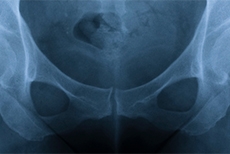
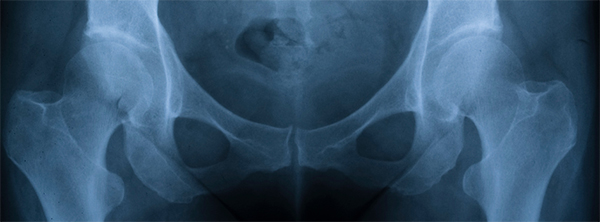
Borderline hip dysplasia occurs when the hip socket provides insufficient coverage or support for the femoral head, but the abnormality may be less obvious than in more severe forms of dysplasia.
Because the condition can involve different areas of the hip socket, selecting the appropriate surgical treatment may be complex. One available treatment is periacetabular osteotomy, commonly called PAO. In some cases, surgeons may also perform hip arthroscopy during the same operation.
A recent study evaluated patients with borderline hip dysplasia who underwent PAO. The researchers compared outcomes between patients treated with PAO alone and those treated with PAO plus hip arthroscopy.
Both groups experienced significant clinical improvement, and adding hip arthroscopy did not produce significantly different clinical or radiographic outcomes during the study period.
How Was Borderline Hip Dysplasia Defined?
The researchers reviewed PAO procedures performed between 2016 and 2023. A total of 223 patients were initially analyzed, and 73 met the study's criteria for borderline hip dysplasia.
The diagnosis was based on several radiographic and tomographic measurements that evaluate coverage of the femoral head by the hip socket. These included:
- A lateral center-edge angle greater than 20 degrees
- An anterior wall index of 0.3 or lower
- A posterior wall index of 0.85 or lower
- At least one tomographic acetabular sector angle below the specified threshold
Using multiple measurements allowed the researchers to evaluate different patterns of insufficient acetabular coverage rather than relying on a single X-ray measurement.
Different Patterns of Borderline Hip Dysplasia
The hips were further classified using a modified Ottawa classification. This system divided patients into three anatomical subtypes:
- Anterior-wall deficient: Insufficient coverage involving the front wall of the hip socket
- Posterior-wall deficient: Insufficient coverage involving the back wall
- Anterior- and posterior-wall deficient: Insufficient coverage involving both walls
The researchers examined whether these anatomical differences affected the results following surgery.
According to the study, PAO produced excellent early clinical and radiographic outcomes regardless of the anatomical subtype of borderline hip dysplasia.
PAO Alone vs. PAO With Hip Arthroscopy
The 73 patients with borderline hip dysplasia were divided into two treatment groups:
- 37 patients underwent PAO without hip arthroscopy.
- 36 patients underwent PAO with concomitant hip arthroscopy.
Concomitant means the hip arthroscopy was performed during the same surgical treatment as the PAO.
The average follow-up period was:
- 49.4 months for the PAO-only group
- 44.1 months for the PAO-plus-arthroscopy group
The researchers compared patient-reported outcomes, radiographic correction, and postoperative complications between the two groups.
Significant Improvement After Surgery
Patients experienced significant improvements across all three outcome measures included in the study.
Modified Harris Hip Score
The average modified Harris Hip Score improved from 63.3 before surgery to 93.1 after surgery.
This score was used to evaluate changes in hip-related symptoms and function.
Hip Disability and Osteoarthritis Outcome Score
The average Hip Disability and Osteoarthritis Outcome Score improved from 61.6 before surgery to 92.3 after surgery.
UCLA Activity Score
The median University of California Los Angeles activity score improved from 7 before surgery to 9 after surgery.
All three improvements were statistically significant.
Were the Improvements Meaningful to Patients?
The study also evaluated whether the changes represented clinically meaningful improvements rather than only statistically significant differences.
More than 95% of patients achieved the minimal clinically important difference and patient-acceptable symptom state for both the modified Harris Hip Score and the Hip Disability and Osteoarthritis Outcome Score.
These measures help answer two important questions:
- Minimal clinically important difference: Did the patient experience a meaningful amount of improvement?
- Patient-acceptable symptom state: Did the patient reach a level of symptoms and function considered satisfactory?
Approximately 70% of patients achieved substantial clinical benefit, representing a higher level of meaningful improvement.
These results suggest that most patients experienced improvements that were noticeable and important from the patient's perspective.
Did Adding Hip Arthroscopy Improve the Results?
The researchers found no significant differences between patients who underwent PAO alone and those who underwent PAO with hip arthroscopy.
The groups had comparable results in:
- Patient-reported clinical outcomes
- Radiographic correction
- Rates of meaningful clinical improvement
Therefore, the study did not show that adding hip arthroscopy resulted in significantly better early outcomes than performing PAO alone.
This finding does not establish that hip arthroscopy is unnecessary in every case. Instead, it indicates that both treatment groups achieved similarly favorable outcomes within this study.
Did the Anatomical Subtype Affect the Outcome?
The anatomical pattern of borderline hip dysplasia also did not significantly change the results.
Patients with anterior-wall deficiency, posterior-wall deficiency, or deficiency involving both walls experienced favorable early outcomes after PAO.
This suggests that PAO may provide clinical and radiographic improvement across the different anatomical subtypes included in the study.
Complications and Additional Procedures
The study reported 25 postoperative complications, which were classified using the Clavien-Dindo system.
Three patients underwent another operation for implant removal.
The abstract does not provide a detailed breakdown of the severity or specific nature of all reported complications. Therefore, the total number should be considered alongside the limited complication information provided.
What Do These Findings Mean?
The study indicates that PAO can provide significant early improvements in symptoms, function, activity, and radiographic measurements for patients with borderline hip dysplasia.
Its primary findings were:
- Patient-reported outcome scores improved significantly after PAO.
- More than 95% of patients achieved meaningful improvement and an acceptable symptom state on two major hip outcome measures.
- Approximately 70% achieved substantial clinical benefit.
- PAO alone and PAO with hip arthroscopy produced comparable outcomes.
- Results did not significantly differ among the anatomical subtypes of borderline hip dysplasia.
Because the study reported early outcomes with average follow-up periods of approximately four years, the findings should not automatically be interpreted as evidence of identical long-term results.
The Bottom Line
Patients with borderline hip dysplasia experienced excellent early clinical and radiographic outcomes following periacetabular osteotomy.
Significant improvements occurred whether PAO was performed alone or with concomitant hip arthroscopy. Outcomes were also favorable across anterior-wall, posterior-wall, and combined wall-deficiency patterns.
These findings support PAO as an effective treatment option for appropriately selected patients with borderline hip dysplasia. However, whether hip arthroscopy should be included must be determined according to each patient's individual condition and surgical evaluation.
We are committed to providing personalized care and innovative treatments to help patients return to peak performance safely and effectively. To learn more about hip arthroscopy, schedule a consultation with Dr. Kelechi Okoroha today.
Seeing patients in Dallas, Richardson, Frisco, and beyond, Dr. Okoroha provides specialized care focused on optimizing recovery, performance, and long-term joint health.