A new analysis, conducted by Dr. Okoroha’s colleagues examined outcomes related to hip arthroscopy. Their research highlights an important takeaway, while new techniques continue to evolve, long-term data remains critical in determining the best approach. Here’s what they found.
https://arthroscopyjournals.onlinelibrary.wiley.com/doi/10.1002/arj.70454
Anterior cruciate ligament tears often occur alongside other knee injuries, including damage to the meniscus. One associated injury that can be particularly difficult to identify is a meniscal ramp lesion.
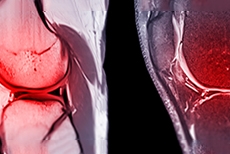
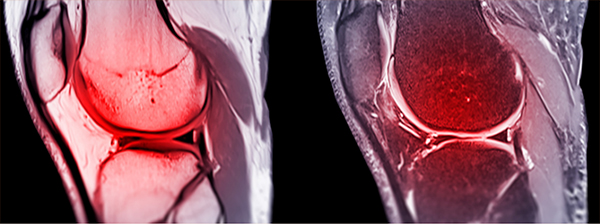
A recent study published in Arthroscopy compared how frequently ramp lesions were detected on preoperative magnetic resonance imaging, or MRI, with how often they were documented during ACL reconstruction surgery.
The researchers found a notable difference: meniscal ramp lesions appeared on 43.2% of MRI scans but were identified during surgery in only 9.8% of patients.
These findings show that the relationship between MRI and surgical findings is more complicated than simply determining which method is correct. Some ramp lesions may heal before surgery, while others may be difficult to see with a standard arthroscopic examination.
What Is a Meniscal Ramp Lesion?
A meniscal ramp lesion is an injury involving the back portion of the medial meniscus, located on the inner side of the knee. It typically affects the area where the posterior horn of the medial meniscus connects to the joint capsule or nearby supporting structures.
Ramp lesions commonly occur with ACL tears because the same twisting or shifting force that damages the ACL can also place stress on the back of the medial meniscus.
These injuries are sometimes called “hidden lesions” because their location makes them difficult to see through the standard viewing portals used during knee arthroscopy.
Why Are Ramp Lesions Important?
The medial meniscus helps distribute pressure, absorb shock, and support knee stability. A significant or unstable ramp lesion may contribute to continued forward or rotational movement of the knee after an ACL injury.
If an unstable lesion remains untreated, it may potentially:
- Contribute to persistent knee instability
- Place additional stress on an ACL graft
- Allow the meniscal tear to progress
- Increase abnormal pressure within the knee
- Affect the knee’s long-term function
However, not every ramp lesion behaves the same way. Some are small and stable, while others extend more deeply through the meniscus and are more likely to remain unstable.
What Did the Study Examine?
The researchers reviewed patients with ACL tears who underwent MRI before ACL reconstruction. Ramp lesions seen on MRI were classified according to their location and appearance.
The MRI findings were then compared with the lesions documented during surgery.
Researchers also examined whether a bone bruise on the posteromedial tibia—the back inner portion of the shinbone—was associated with a ramp lesion.
The main findings were:
- Ramp lesions were detected on MRI in 43.2% of patients.
- Ramp lesions were documented during ACL reconstruction in 9.8%.
- MRI demonstrated high sensitivity but lower specificity when compared with arthroscopy.
- None of the MRI-detected stable type 1 or type 2 lesions were later identified during surgery.
- All lesions found on both MRI and arthroscopy belonged to subtypes considered unstable.
- Posteromedial tibial bone bruising was associated with ramp lesions on both MRI and at surgery.
Why Were More Lesions Seen on MRI Than During Surgery?
Several possible explanations may account for the difference.
Some stable lesions may heal
The stable type 1 and type 2 lesions found on MRI were not subsequently identified during surgery. One possibility is that these smaller injuries underwent biological healing during the time between imaging and ACL reconstruction.
MRI may therefore capture an injury-related tissue change that is no longer visible by the time surgery occurs.
MRI may detect abnormalities that are not persistent tears
MRI is highly detailed and may show swelling, tissue separation, or signal changes around the meniscus. Some of these findings may resemble a ramp lesion but may not represent an unstable tear requiring surgical treatment.
In this study, MRI had a sensitivity of 96.5%, meaning it identified nearly all ramp lesions later seen during surgery. However, its specificity was 62.6%, meaning some MRI findings did not correspond with a surgically identified lesion.
Standard arthroscopy may miss hidden lesions
The back of the medial meniscus can be difficult to examine using standard anterior arthroscopic portals. A surgeon may need to view the area through the intercondylar notch or create an additional posteromedial portal for a more complete assessment.
Previous research has suggested that a substantial number of ramp lesions may be missed without this additional approach. Because a posteromedial portal was not routinely used in the current study, some lesions may have been present but not visible during surgery.
At the same time, creating an additional portal and removing tissue covering the area may not be necessary for every stable lesion. More research is needed to determine which MRI findings require further surgical exploration.
What Does a Posteromedial Tibial Bone Bruise Mean?
A posteromedial tibial bone bruise is an area of bone injury visible on MRI near the back inner portion of the tibia. It may occur through the same injury mechanism that produces an ACL tear and ramp lesion.
In this study, 50.6% of patients with MRI-detected ramp lesions also had posteromedial tibial bone bruising.
However, a bone bruise alone does not confirm a ramp lesion:
- Bone bruising was also present in 36.2% of patients without a ramp lesion.
- Ramp lesions were found in some patients who did not have posteromedial tibial
- bruising.
The bruise should therefore be viewed as a clue that may prompt closer examination of the medial meniscus—not as a diagnosis by itself.
Does Every Ramp Lesion Require Repair?
Not necessarily. Treatment depends on the lesion’s size, location, stability, healing potential, and appearance during surgery.
A small, stable lesion may heal or remain stable after the knee’s ACL stability is restored. In contrast, a larger or unstable tear may require repair during ACL reconstruction to restore meniscal function and protect the knee.
The decision may be based on:
- MRI appearance
- Arthroscopic examination
- Stability when the meniscus is probed
- Tear depth and location
- Tissue quality
- Associated knee instability
- The patient’s age and activity goals
MRI provides valuable information before surgery, but it should not automatically determine whether a lesion requires repair. Imaging findings must be interpreted alongside the surgical examination and the patient’s overall condition.
Understanding the Study’s Limitations
This was a retrospective study, meaning the researchers examined previously collected imaging and surgical records.
A posteromedial portal was not routinely used during ACL reconstruction, which may have caused some ramp lesions to be missed during surgery. The relatively small number of surgically confirmed lesions also limited the number of factors researchers could evaluate.
In addition, the study did not determine whether the MRI-detected lesions that were absent during surgery had truly healed, were initially overdiagnosed, or were simply missed during arthroscopy.
These limitations mean the findings should not be interpreted as proof that MRI is more accurate than surgery. Instead, they highlight the challenges involved in diagnosing different ramp lesion subtypes.
The Importance of a Complete ACL Evaluation
An ACL tear may be only one part of a more complex knee injury. Careful evaluation of the medial meniscus is important because certain ramp lesions can contribute to instability and may affect the reconstructed ACL.
MRI can help identify suspicious abnormalities before surgery, particularly when an unstable ramp lesion or posteromedial tibial bone bruise is present. During ACL reconstruction, the surgeon can then evaluate the posterior medial meniscus and determine whether additional treatment is necessary.
If you have sustained an ACL injury, a complete evaluation can help identify associated meniscus damage and determine the treatment plan best suited to your knee, activity level, and recovery goals.
We are committed to providing personalized care and innovative treatments to help patients return to peak performance safely and effectively.
Seeing patients in Dallas, Richardson, Frisco, and beyond, Dr. Okoroha provides specialized care focused on optimizing recovery, performance, and long-term joint health.
Visit: